New Markets Tax Credit
CEF has deployed $248 Million of Impact
Funding transformative projects to enhance communities and drive economic growth
See Latest ProjectThe New Markets Tax Credit (NMTC) Program incentivizes community development and economic growth by using tax credits that attract private investment to distressed communities.
According to Community Development Financial Institutions Fund, low-income communities, have historically, experienced a lack of investment, as evidenced by vacant commercial properties, outdated manufacturing facilities, and inadequate access to education and healthcare service providers. The New Markets Tax Credit Program (NMTC) aims to break this cycle of disinvestment by attracting the private investment necessary to reinvigorate struggling local economies.
The NMTC Program attracts private capital into low-income communities by permitting individual and corporate investors to receive a tax credit against their federal income tax in exchange for making equity investments in specialized financial intermediaries called Community Development Entities (CDE). The credit totals 39% of the original investment amount and is claimed over a period of seven years.
Press Release: U.S Treasury Announces New Market Tax Credit Awards
How it Works:
- Tax credits awarded by the US Department of Treasury to CDE.
- Colorado Enterprise Fund works as a CDE, with investors, typically large banks, to provide funding towards the project.
- Investors are awarded credits against their federal tax obligations.
- Investors lend capital to businesses, developers, or nonprofits at preferential rates and terms to complete the project.
Types of NMTC projects include:
- Manufacturing
- Hospitality
- Community Services
- Retail
- Healthy Food Access
- Technology
Criteria for NMTC projects:
- Project will create quality jobs.
- Project will impact the community via development, economic growth, or positive environmental impact.
- Priority is given to projects located in underserved or distressed communities.
- Community poverty rate exceeds 20% or median family income is below 80% of state median income.
To date, CEF has allocated $248M in NMTCs to the Colorado businesses below.
Food Bank of the Rockies (2023)

Food Bank of the Rockies (FBR) is a nonprofit organization that solicits, collects, and distributes food to those in need of assistance. It is the largest hunger relief organization in the Rocky Mountain region, distributing upwards of 178,000 meals every day. Food distribution in Western Colorado had begun to outpace the capacity of the distribution facility in Palisade well before COVID, but the pandemic heightened the need for a larger space. Therefore, FBR relocated to a new distribution center in Grand Junction to increase distribution volume by 48% in the Western Slope over the next four years.
The NMTC loan is being used to:
- Cover increases in operating costs at the new Western Slope facility, including food purchases and payroll.
Benefits of the project to the community:
- Creation and retention of 38 full-time permanent jobs (96% will be quality jobs* & 100% will be accessible to low-income persons or residents of low-income communities).
- The facility will distribute 16 million pounds of food and serve 50,400 low-income individuals annually.
*Quality jobs offer wages in excess of the local living wage and/or employer-sponsored benefits
Vail Health Services (2023)

Vail Health Services (VHS) ia a nonprofit community healthcare system serving Eagle & Summit counties in Colorado. What began as a single health clinic has expanded into a full-service hospital & 12 health service locations. Despite this growth, there remains a critical need for mental health services, especially inpatient care facilities. Currently, community members must travel a minimum of two hours to reach the closest psychiatric hospitals.
The NMTC loan is being used to:
- Construct a new 45,000 sf inpatient psychiatric care facility, the Precourt Healing Center. This will be a 3-story building with 28 inpatient beds (14 adult/14 adolescent).
- Remodel the Wiegers Clinic, an outpatient mental health facility.
Benefits of the project to the community:
- Create 129 temporary jobs (95% will be quality jobs* & 85% expected to be accessible to low-income persons or residents of low-income communities).
- Create or retain 116 permanent jobs (100% will be quality jobs* & 90% will be accessible to low-income persons or residents of low-income communities).
- Precourt Healing Center will serve approximately 686 patients annually and Wiegers Clinic is expected to serve approximately 1,550 patients annually. At least 60% of patients are expected to be low-income persons or residents of low-income communities.
*Quality jobs offer wages in excess of the local living wage and/or employer-sponsored benefits.
Hotel St. Cloud (2022)


Hotel St. Cloud will serve as a catalyst to help revitalize downtown Canon City and bolster the local economy. This project along with other revitalization efforts will create quality, living wage jobs to ensure a diverse economic base, a resilient and growing tax base, and long-term economic vitality for local businesses.
Unbridled, an event management company in Colorado, purchased Hotel St. Cloud in 2018. With the help of many private and public parties, including a $3 million Community Revitalization Grant from the Colorado Office of Economic Development and International Trade (OEDIT) and a New Market Tax Credit financing of $9 million from Colorado Enterprise Fund, this $15 million project will break ground November 2022.
Hotel St. Cloud is located in Canon City which is an area with a 14.6% unemployment rate, 34.8% poverty rate, and a 51.5% median family income. Unbridled used a NMTC to:
- Renovate a 26,000 sf 19th-century historic structure to include a bar, three restaurants, and a boutique hotel.
Benefits of the project to the community:
- Create 59 full-time temporary construction jobs (80% expected to be filled by Targeted Job Seekers*)
- Create 39 full-time permanent jobs in the hospitality industry (93% expected to be filled by Targeted Job Seekers*)
- Increase tourism and hospitality to bolster the local economy
*Targeted Job Seekers = low-income person, resident of a low-income community, person with lower levels of education, or person that faces barriers to employment.
Clifton Community Resource Campus (2022)


Clifton Community Resource Campus is a 20-acre development in Mesa County being constructed to address several needs in the community, notably the severe shortage of childcare and early childhood education (ECE) services. Mesa County is considered a childcare desert and has only enough licensed childcare providers to serve 20% of children ages 0-5. This new community resource campus is located in a distressed area with a 29% poverty rate, a 15.9% unemployment rate, and a family median income of 51.8%. The NMTC loan is being used to:
- Create a community resource campus to include a 22,690 square-foot ECE center, an 11,944 square-foot ECE training hub, and an 11,970 square-foot gymnasium with space for community events.
Benefits of the project to the community:
- Create approximately 73 temporary jobs (100% expected to be filled by Targeted Job Seekers*)
- Create 59 permanent jobs (87% expected to be filled by Targeted Job Seekers*)
- The new ECE center will provide 154 early childhood education seats of which 95% are expected to be filled by low-income persons or residents of low-income communities.
- The ECE training hub will help create a pipeline of licensed ECE service providers.
*Targeted Job Seekers = low-income person, resident of a low-income community, person with lower levels of education, or person that faces barriers to employment.
TruStile Doors (2020)


TruStile Doors is based in Denver and manufactures interior and exterior doors for residential and commercial uses. The facility is located in an area with 15.7% unemployment and a median family income of 48.4%. TruStile used an NMTC loan to:
- Remove environmental contaminants in the site's soil
- Build a 260,000 sf manufacturing, warehouse, and office facility
- Install a 1.5 megawatt photovoltaic roof-mounted solar array
- Install a biomass boiler system that utilizes sawdust waste to heat and cool the facility
- Purchase and install equipment to increase production
Benefits of the project to the community:
- Created 825 construction jobs (80% filled by Targeted Job Seekers*)
- Retained 300 permanent jobs and created 200 permanent jobs (84% filled by Targeted Job Seekers*)
- Added environmental systems are estimated to reduce carbon emissions by 22,000 tons annually and eliminates the transportation of 650 tons of waste monthly.
*Targeted Job Seekers = low-income person, resident of a low-income community, person with lower levels of education, or person that faces barriers to employment.

Habitat for Humanity of Metro Denver

Habitat for Humanity of Metro Denver, Inc. (HFHMD) is one of the largest Habitat for Humanity affiliates in the country. Providing low-income families with safe, affordable housing through its Homeownership Program, Exterior Home Repair Program, and CAPABLE Program is the objective of HFHMD which serves Adams, Arapahoe, Denver, Douglas, and Jefferson counties. HFHMD’s offices, production warehouse, and ReStore facilities are in separate locations throughout Denver, which has proven costly, inefficient, and unsustainable in the long term, so they are establishing a new headquarters to house all of its operations under one roof.
The NMTC loan is being used to:
- Cover cost of renovations to 46,267 square-foot building acquired in Denver. (22,000 sf for production/manufacturing space, 13,000 sf of administrative & programming offices, 6,000 sf for ReStore warehouse and distribution facility.)
- Provide working capital for inventory to ramp up ReStore operations.
Benefits of the project to the community:
- Enable HFHMD to increase delivery of new homes from 50 homes per year to 65 per year.
- Increase capacity of the home repair and improvement program from 100 homes per year to 125 homes per year.
- Retain 96 and create 20 new full-time permanent jobs (100% will be quality jobs* & 74% will be accessible to low-income persons or residents of low-income communities).
- Create 30 temporary jobs (80% will be quality jobs* & 80% will be accessible to low-income persons or residents of low-income communities).
Quality jobs offer wages in excess of the local living wage and/or employer-sponsored benefits.
Cleo Parker Robinson Dance

Cleo Parker Robinson Dance (CPRD) is a prominent minority-led arts and education nonprofit based in Denver rooted in African American traditions. CPRD is one of the largest cultural arts institutions in the Rocky Mountain region and serves as a modern dance company, dance academy, and theater, as well as providing cultural education and health/wellness programming. CPRD has outgrown its existing 25,000-square-foot building and needs to expand its ability to serve its community. The $28.5 million project will double the size of the existing building.
The project is being funded with an NMTC loan from CEF and the Colorado Growth and Revitalization Fund. The NMTC loan is being used to:
- Construct a 25,000 square-foot addition to their existing building built in 1925.
- Add space for a new WellPower behavioral health clinic, a new administrative hub for the STAR program (a 911 alternative response for mental health crisis), and two new theaters for their various dance and youth programming
- Expand their studio space and office space.
Benefits of the project to the community:
- Serve 260 behavioral health patients annually via the WellPower clinic.
- Serve 50 people annually with the new STAR administrative hub.
- Increase CPRD’s youth arts programs from 850 annual visits to 4,800 annual visits.
- Increase CPRD’s youth job training programs from 54 participants annually to 90 annual participants.
- Create or retain 49 permanent jobs (100% will be quality jobs* & 84% will be filled by targeted job seekers **).
- Create or retain 33 temporary construction jobs (100% will be quality jobs* & 95% will be filled by targeted job seekers **).
*Quality jobs offer wages in excess of the local living wage and/or employer-sponsored benefits.
**Targeted Job Seekers = low-income person, resident of a low-income community, person with lower levels of education, or person that faces barriers to employment.
PrimeHealth/MarillacHealth

MarillacHealth , now PrimeHealth, has served Mesa County since 1988 and became a Federally Qualified Health Center (FQHC) in 2015. They provide affordable, accessible, high-quality healthcare services to all, regardless of income or insurance status. Marillac’s existing clinics have been serving patients above their capacity for several years. Per a recent health needs assessment, one in six Mesa County residents has no consistent source of health care. Mesa County is identified as a low-income primary care provider shortage area and has a median family income of 59.99%.
The NMTC loan will be used to:- Construct a new 27,000 sf clinic to offer primary care, behavioral health counseling, dental care, integrated pediatric medical and dental services, and a walk-up & drive-thru pharmacy.
Benefits of the project to the community:
- Serve 12,000 patients annually, 76% of whom are expected to be low-income persons or residents of low-income communities.
- Create or retain 79 permanent jobs (100% will be quality jobs* & 75% will be filled by targeted job seekers **).
- Create 70 temporary construction jobs (90% will be quality jobs* & 75% will be filled by targeted job seekers **).
*Quality jobs offer wages in excess of the local living wage and/or employer-sponsored benefits.
**Targeted Job Seekers = low-income person, resident of a low-income community, person with lower levels of education, or person that faces barriers to employment.
Food Bank of the Rockies - Aurora

Food Bank of the Rockies (FBR) is a nonprofit organization that solicits, collects, and distributes food to those in need of assistance. They service 30 counties in Colorado and the state of Wyoming. FBR works with over 800 hunger relief partners to distribute the equivalent of 181,500 meals every day. FBR’s existing distribution facility is at full capacity and there continues to be a greater need for FBR’s services year after year due to inflation, growing population, and cuts in governmental food assistance.
The NMTC loan is being used to:
- Cover gap financing needed to construct a new 260,000-square-foot distribution center in Aurora, CO.
Benefits of the project to the community:
- Distribute 96.1 million pounds of food annually by 2028, which is a 20% increase in distribution capacity.
- Cost savings of millions of dollars with the ability to receive, handle, store, and distribute larger bulk food purchases due to doubling the number of loading dock bays, 100% more cold storage space and 67% more dry storage space.
- Enable FBR to prepare five times more meals for summer and after-school programs and create more nutritious menus due to the new kitchen accommodating up to 27 people versus 9 in the current kitchen.
- Retention of 152 and create 179 full-time permanent jobs (99% will be quality jobs* & 96% filled by targeted job seekers **).
- Create 128 temporary jobs (75% will be quality jobs* & 95% filled by targeted job seekers**).
*Quality jobs offer wages in excess of the local living wage and/or employer-sponsored benefits. **Targeted Job Seekers = low-income person, resident of a low-income community, person with lower levels of education, or person that faces barriers to employment.
Food Bank of the Rockies

Food Bank of the Rockies (“FBR”) is a nonprofit organization that solicits, collects, and distributes food to those in need of assistance. Servicing an area covering 30 counties of Colorado and the entire state of Wyoming, it is the largest hunger relief organization in the Rocky Mountains region. Food Bank of the Rockies Etkin Family Distribution Center in Grand Junction, Colorado, provides hunger relief support with distributing upwards of 185,000 meals every day. This number has increased by 7,000 meals per day since 2023.
The NMTC loan will be used to:
- Cover growing operating costs of the Western Slope Facility allowing the organization to increase food distribution and narrow the gap between community need and hunger relief services as the food insecurity rates have reached a 10-year high.
Benefits of the project to the community:
- Serve 59,500 low-income individuals in 2025 by distributing 12.2 million pounds of food in 2025.
- Support the creation and retention of 40 full-time equivalent permanent jobs.
- 99% of permanent positions are expected to be *quality jobs.
- 95% of permanent positions are expected to be filled by Targeted Job Seekers**.
*Quality jobs offer wages in excess of the local living wage and/or employer-sponsored benefits
**Targeted Job Seekers = low-income person, resident of a low-income community, person with lower levels of education, or person that faces barriers to employment.

Rio Grande Wellness Center

Rio Grande Hospital (RGH) is a nonprofit healthcare organization serving the Western San Luis Valley. RGH operates a hospital in Del Norte, as well as three other healthcare clinics in Creede, Monte Vista, and South Fork. Based on a recent community health needs assessment, RGH determined they needed to create a community wellness facility. The Wellness Center, along with six tiny home lodging units, is expected to improve the health and well-being of the surrounding low-income community.
The NMTC loan will be used to:
- Fill the financing gap to construct the 9,000 sf clinic and several small housing units available to those who don’t live close by or who are spending time with loved ones during treatment or hospice. The facility, adjacent to the hospital campus, will include a kitchen for nutritional classes, a fitness room, private meditation rooms, a community lounge, a community conference room, and other amenities
Benefits of the project to the community:
- Serve 550 individuals annually and the lodging units are expected to serve about 730 individuals annually.
- Create 41 temporary construction jobs and create 4 full-time permanent jobs.
Hilltop Community Resources

Hilltop Community Resources has been serving Western Colorado for more than 70 years. They provide care through behavioral health counseling, domestic violence and sexual assault support, food and healthcare assistance, parenting and early childhood development programs, and housing support. Hilltop has outgrown its existing facilities, which face space constraints, accessibility barriers, and an inability to meet rising demand for services.
The NMTC loan will be used to:
- Renovate a 56,730 sf building in downtown Grand Junction, which will serve as its new headquarters and program hub.
- Address several community-level issues documented in the Mesa County 2024-2026 Community Health Needs Assessment.
Benefits of the project to the community:
- Expand its annual reach from approximately 14,695 clients to 17,395 clients, the majority of whom are expected to be low-income persons or residents of low-income communities.
- Create 42 and retain 110 permanent jobs (100% will be quality jobs* & will be filled by targeted job seekers **).
- Create 65 temporary construction jobs (86% will be quality jobs* & 75% will be filled by targeted job seekers **).
*Quality jobs offer wages in excess of the local living wage and/or employer-sponsored benefits.
**Targeted Job Seekers = low-income person, resident of a low-income community, person with lower levels of education, or person that faces barriers to employment.
Jefferson Center for Mental Health

Jefferson Center for Mental Health (JCMH) has been a vital resource for over 65 years. They are a non-profit serving approximately 27,000 patients annually across 18 facilities and over 100 other community-based locations. Their services are a full continuum of mental health, substance-use recovery, and supportive housing services that help stabilize individuals and families facing behavioral-health challenges.
The NMTC loan will be used to:
- Provide JCMH with critical operational support to continue providing essential behavioral healthcare and recovery services at its Adult Residential Recovery Center and Union Square Health Plaza in Lakewood.
- Advance the development of Soteria Landing, a new comprehensive recovery campus scheduled to open in 2026.
Benefits of the project to the community:
- Address behavioral-health services as rates of suicide, drug overdose, and binge drinking in Jefferson County exceed state averages based on the Jefferson County 2023 Community Health Assessment.
- Retain 186 permanent jobs (100% are quality jobs* & 75% are filled by targeted job seekers **).
*Quality jobs offer wages in excess of the local living wage and/or employer-sponsored benefits.
**Targeted Job Seekers = low-income person, resident of a low-income community, person with lower levels of education, or person that faces barriers to employment.
New Markets Tax Credits- FY26
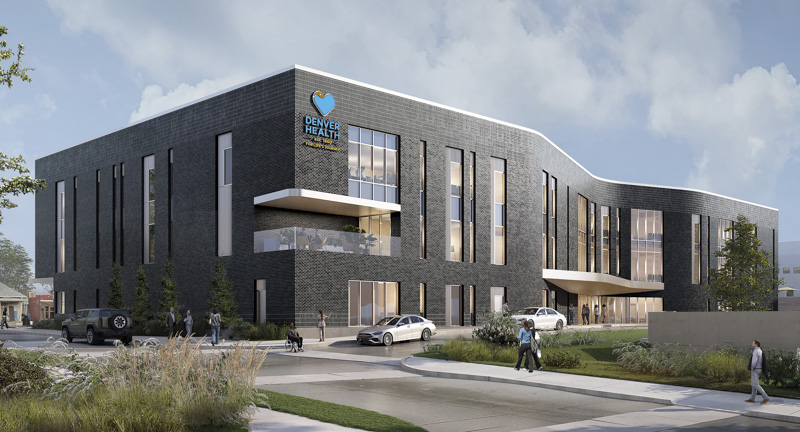
Denver Health and Hospital Authority (DHHA) is a comprehensive safety-net healthcare system serving the Denver community for over 165 years. This healthcare network provides care to all patients regardless of their ability to pay. The Sam Sandos Westside Family Health Center is part of DHHA and serves a predominantly low-income population and has a high proportion of residents who are uninsured or underinsured. The existing facility is more than 40 years old and operating at capacity.
The NMTC loan will be used to:
- Construct a new 82,500 sf medical clinic to replace the existing 45,000 sf facility
- Address several community priorities identified in DHHA’s 2023 Community Health Needs Assessment & the 2025 Denver Dept. of Public Health & Environment Community Health Assessment.
- Expand access to existing services as well as include new services such as radiology, physical therapy, and occupational therapy. Sam Sandos Westside Family Health Center will increase the number of patients served annually from 28,800 to 35,000, reduce wait times, and improve access to comprehensive healthcare services.
- Create 47 and retain 119 permanent jobs (100% will be quality jobs* & 73% will be filled by targeted job seekers **).
- Create 250 temporary construction jobs (94% will be quality jobs* & 75% will be filled by targeted job seekers **).
*Quality jobs offer wages in excess of the local living wage and/or employer-sponsored benefits..
**Targeted Job Seekers = low-income person, resident of a low-income community, person with lower levels of education, or person that faces barriers to employment.
Confluence Center of Colorado
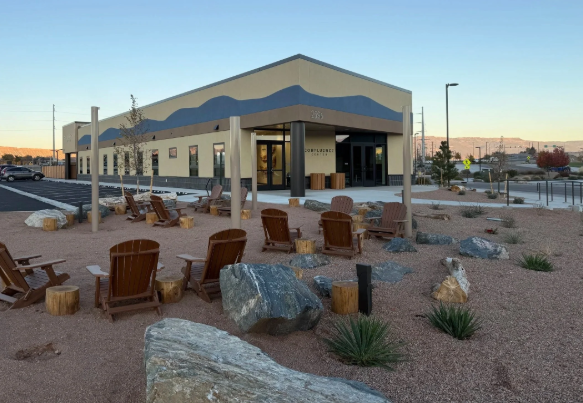
- Help repay the remaining construction debt on an 11,000 sf facility built in late 2025 and fund facility-level operating expenses.
- Provide 45 full-time preschool slots as the facility will also be home to the STREAM (science, technology, rivers, engineering, the arts, and mathematics) Preschool & Childcare Center. This will help address the childcare access gap identified in the Mesa County 2024-2026 Community Health Needs Assessment.
- Confluence Center will provide working space for multiple nonprofit organizations, a land & water resource hub, childcare center & preschool, and an interpretive lobby with public-facing educational exhibits and information related to the region’s land, water, science, recreational, and agricultural resources.
- Create or retain 66 full-time permanent jobs (98% will be quality jobs* & 100% will be filled by targeted job seekers **).
- Create 36 temporary construction jobs (100% will be quality jobs* & 100% will be filled by targeted job seekers **).
*Quality jobs offer wages in excess of the local living wage and/or employer-sponsored benefits..
**Targeted Job Seekers = low-income person, resident of a low-income community, person with lower levels of education, or person that faces barriers to employment.